
How to Pack for a Move, One Room at a Time
Packing is usually the longest part of any move. Leave it too late and it turns into a rush of half-filled boxes and missing tape. Start with a plan and it becomes a series of smaller jobs you can work through over a few weeks.
This guide explains how to pack for a move room by room, with practical tips that make moving day and unpacking much easier.
Before you start: supplies and a plan
What you’ll need
- Sturdy boxes in a few sizes, with more small ones than you think you’ll need.
- Good-quality packing tape and a tape dispenser.
- Thick markers for labelling.
- Packing paper and bubble wrap for fragile items.
- Old towels and linen, which are handy for extra padding.
- Zip-lock bags for screws, cables and small parts.
Start with the rooms you use least
Begin with spare rooms, storage cupboards, the garage and seasonal items. Leave the kitchen, bathroom and bedrooms until closer to the day. That way your home stays liveable while packing is under way.
It’s also the best time to declutter. Every item you sell, donate or throw out is one less thing to pack, carry and unpack.
Label boxes so unpacking is easier
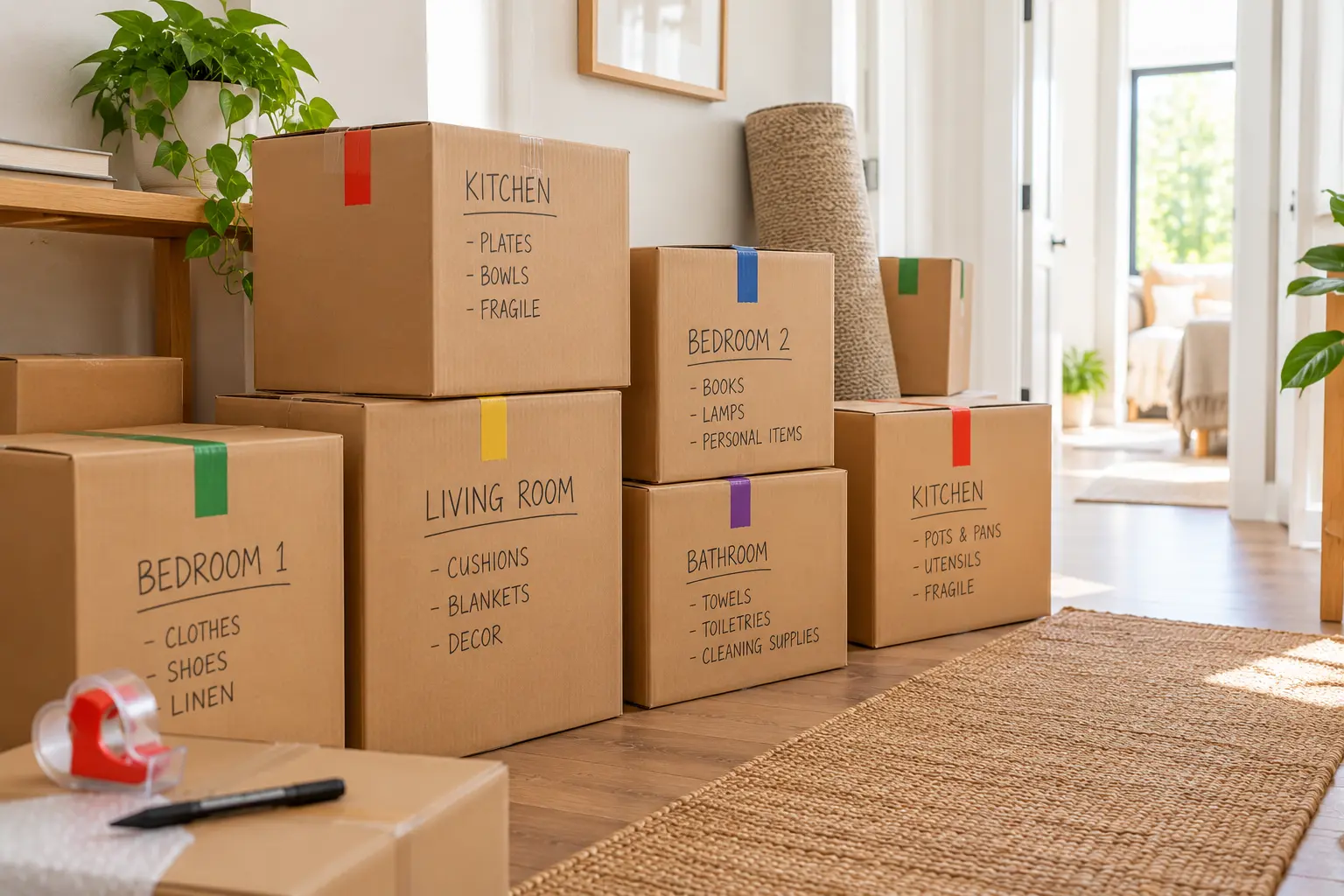
Good labelling saves time at both ends of the move. On each box, write:
- the room it’s going to in the new home;
- a short description of the contents;
- “FRAGILE” and “THIS WAY UP” where needed.
Label the side of the box as well as the top, so you can still read it when boxes are stacked. Some people use a different colour for each room, which makes it easy for the crew to place boxes in the right spot.
Room-by-room packing tips
Kitchen
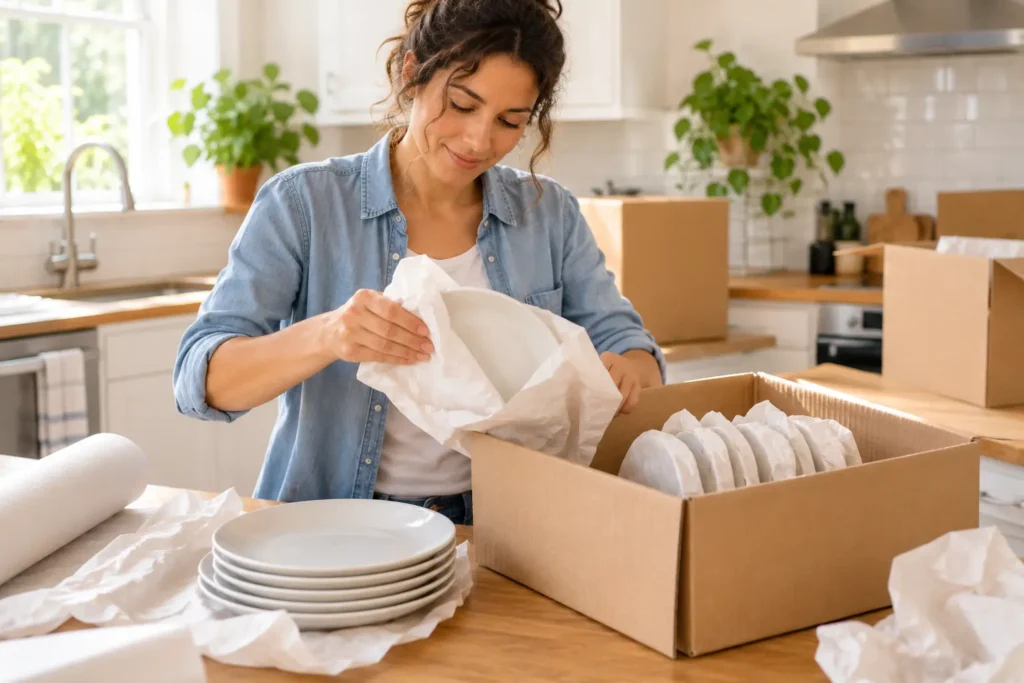
The kitchen usually takes the longest, so give it more time than you expect. Wrap plates individually and stand them on their edge in the box, rather than stacking them flat. Wrap glasses separately and fill gaps with paper so nothing can move. Keep heavy items like pots and small appliances in smaller boxes.
Use up what’s in the pantry and freezer in the weeks before the move, and set aside a few basic utensils, cups and plates for the last days.
Living room
Pack books in small boxes, because they get heavy quickly. Wrap framed pictures and mirrors in paper or blankets and stand them upright. Take photos of the cables behind your TV and entertainment unit before disconnecting them, then bag and label the cables together.
Bedrooms and wardrobes
Clothes are light and easy to pack. Hanging clothes can go into wardrobe boxes or be bundled with a garbage bag over the top. Folded clothes and linen can fill suitcases and larger boxes. Pack one bag per person with a few days of clothes, so nobody needs to open boxes straight away.
Bathroom and laundry
Seal the lids of liquids with tape or cling wrap, then pack them upright in a plastic tub or a well-lined box. Keep everyday toiletries and any medication aside for your essentials box. Most cleaning products can be used up before the move or packed separately and clearly labelled.
Garage, shed and outdoor items
Clean and dry garden tools and outdoor furniture before packing. Drain fuel from mowers and other equipment, and ask your removalist which items they can’t carry, such as gas bottles, fuel or other flammable products. It’s better to plan how you’ll move or dispose of these before the day.
Pack an essentials box
Your essentials box is the one you open first at the new home. Pack it last, label it clearly and keep it with you or load it last so it comes off first. Include:
- toilet paper, hand soap and a towel;
- phone chargers and a power board;
- kettle, mugs, tea or coffee and a few snacks;
- basic tools, such as a screwdriver and scissors;
- sheets for the first night;
- cleaning basics.
What to keep with you
Some things shouldn’t go on the truck at all. Keep important documents, jewellery, medication, keys, laptops and anything of high personal value with you in the car or in a bag you carry yourself.
Common packing mistakes to avoid
- Overfilling large boxes. Heavy items belong in small boxes. Large boxes are for light, bulky things like pillows and linen.
- Half-empty boxes. Boxes with empty space can collapse when stacked. Fill gaps with paper or towels.
- Leaving it until the last few days. Packing almost always takes longer than planned.
- Forgetting to label. Unlabelled boxes slow down both the unloading and the unpacking.
Ready for the crew
The aim is simple: by the time the crew arrives, boxes should be packed, sealed, labelled and stacked out of the main walkways. That lets the team focus on furniture, loading and transport, and helps the whole day run more efficiently.
Packing up a home on the Sunshine Coast? Let us know about any large or fragile items when you get in touch, so the move can be planned around them.
Packing’s under way? Tell us where you’re moving from, where you’re going and your preferred date, and we’ll give you a clear quote for the move. Get Your Free Quote